Throughout my years of training clients, I’ve come across multiple cases of what’s known as a “frozen shoulder.” The symptoms, as many of my clients describe them, are similar to Shoulder Impingement Syndrome—pain, stiffness, and restricted movement that interfere with even simple daily motions like reaching, lifting, or dressing. But while they can feel alike, a frozen shoulder has distinct underlying causes and a unique recovery process that requires patience and precise movement therapy.
What Is a Frozen Shoulder?
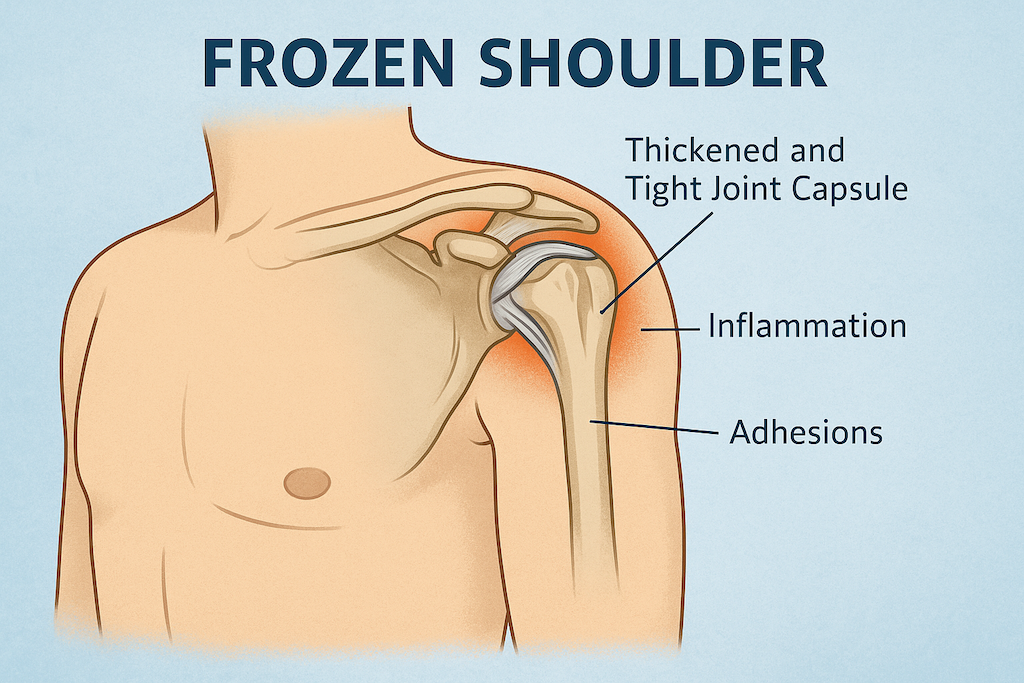
Also called adhesive capsulitis, a frozen shoulder occurs when the connective tissue capsule that surrounds the shoulder joint thickens, tightens, and forms adhesions—bands of scar-like tissue. This restricts movement and causes inflammation and pain. The condition develops gradually and can last months or even years if not addressed correctly.
Common Causes and Risk Factors
A frozen shoulder often develops after periods of immobility—for example, following a shoulder injury, surgery, or even long periods of poor posture.
Other contributing factors include:
- Diabetes: A major risk factor—up to 20–30% of diabetic individuals may develop it.
- Thyroid Disorders: Both hyper- and hypothyroidism increase risk.
- Age & Gender: Most common between 40–65 years, and more prevalent in women.
- Prolonged Immobilization: Wearing a sling or avoiding shoulder movement for too long.
- Inflammatory conditions: Such as arthritis or bursitis that irritate the joint capsule.
Phases of Frozen Shoulder
- Freezing (Painful) Phase: Gradual increase in shoulder pain and stiffness lasting 2–9 months.
- Frozen (Adhesive) Phase: Pain may ease, but movement remains restricted (4–12 months).
- Thawing (Recovery) Phase: Mobility slowly returns (6–24 months).

Each phase demands a tailored approach—forcing movement too early can worsen inflammation, while inactivity prolongs stiffness.
Treatment and Rehabilitation
Most people recover with non-surgical treatments when done consistently.
1. Pain Management
- NSAIDs (ibuprofen, naproxen)
- Corticosteroid injections to calm inflammation
- Ice or heat therapy depending on comfort level
2. Physical Therapy and Gentle Exercises
Physical therapy is the cornerstone of recovery. The goal is to gradually restore range of motion without aggravating pain.
Common early-stage exercises include:
- Pendulum Stretch: Let your arm swing gently in small circles while leaning forward.
- Finger Walk: Walk your fingers up a wall to slowly increase reach.
- Cross-Body Stretch: Gently pull one arm across your chest to stretch the shoulder capsule.
- Armpit Stretch: Lean forward and let the armpit open naturally as the body bends at the waist.
⚠️ Always move within your pain limits to avoid worsening symptoms.
3. Advanced Interventions (if needed)
If mobility doesn’t improve after months of therapy:
- Hydrodilatation: Injecting sterile fluid into the joint to stretch the capsule.
- Manipulation under anesthesia or arthroscopic capsular release may be considered by a specialist.
Prognosis
Recovery takes time—often 1–3 years—but most individuals regain full or near-full mobility with proper care and guided movement. Consistency and patience are the true medicine here.
Professional Guidance
Here at Elements Of G, our trainers can help you with the exercises as recommended by your physical therapist—ensuring proper form, safe progression, and a supportive environment for recovery.
References & Further Reading
- Mayo Clinic – Frozen Shoulder (Adhesive Capsulitis)
Comprehensive overview of causes, symptoms, and treatment options, including physical therapy and surgical interventions. - American Academy of Orthopaedic Surgeons (AAOS) – Frozen Shoulder
Detailed explanation of the stages of frozen shoulder and recommended exercise and recovery strategies. - Cleveland Clinic – Adhesive Capsulitis (Frozen Shoulder)
Explains how frozen shoulder develops, risk factors, and timelines for healing. - National Institute of Arthritis and Musculoskeletal and Skin Diseases (NIAMS)
Scientific and educational resource discussing inflammation of the joint capsule and management through gentle motion and stretching. - Harvard Health Publishing – Stiff Shoulder Syndrome
Focuses on the biomechanics behind the condition and practical home rehabilitation advice. - Physiopedia – Frozen Shoulder (Adhesive Capsulitis)
A professional reference for physiotherapists with detailed insights on differential diagnosis, treatment protocols, and exercise progressions.