
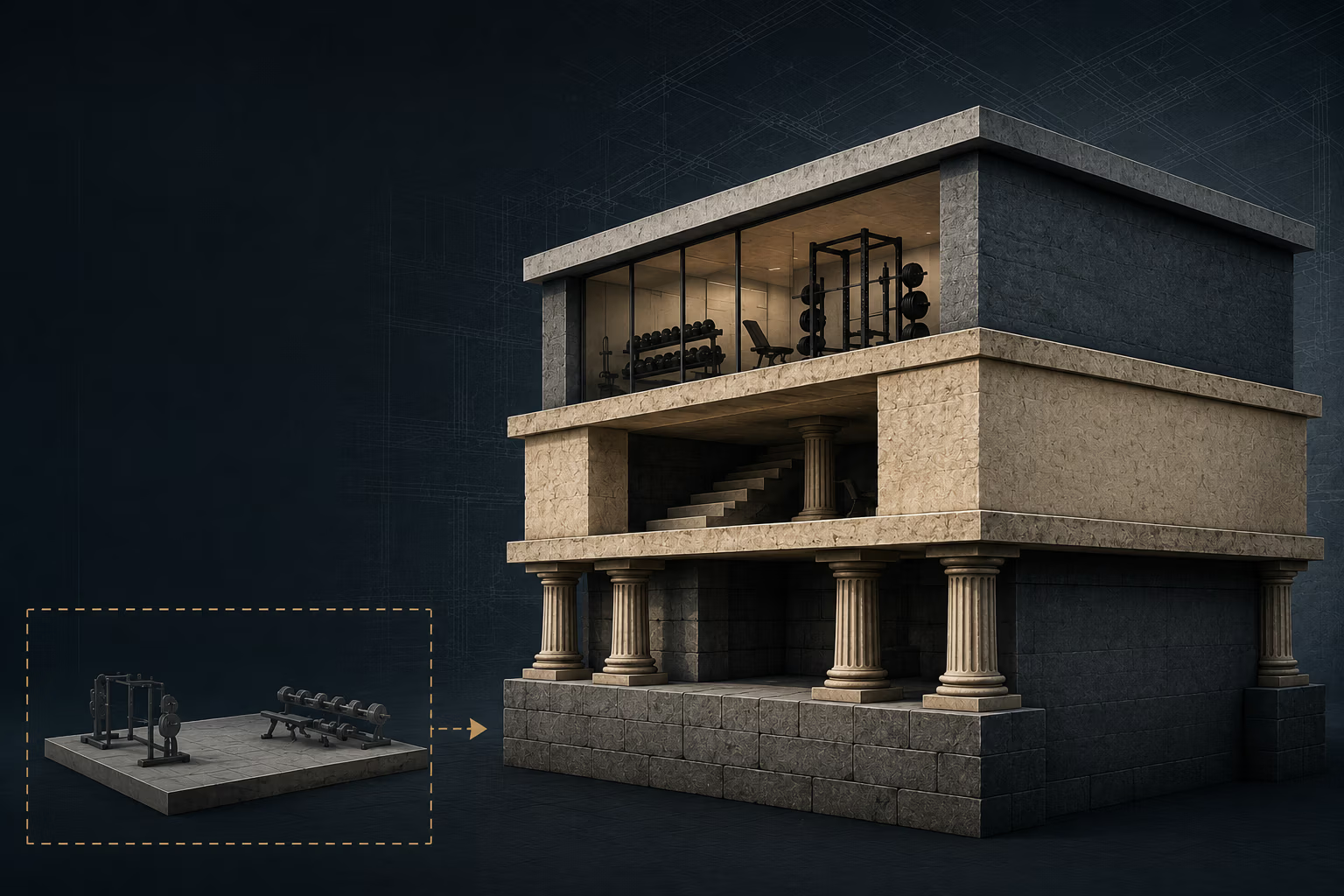
Every methodology has a structure. The gTonnicks Method has three layers — and most fitness programs skip the first two entirely.That is why most fitness programs stop working.
I am often asked what makes the gTonnicks Method different. It is a fair question, and I want to answer it honestly — not with marketing language, but with the actual architecture of how the Method is built and why each layer exists.
There are three layers. They are sequential, not simultaneous. The order is not arbitrary. Each layer creates the conditions that make the next one possible.
Layer One: Assessment — the foundation that is always skipped
Most training programs begin with programming. The trainer has a system — a protocol they have used successfully with previous clients — and they fit the new client into it. The assessment, if it happens at all, is a formality: a few movement screens, maybe a fitness test, sometimes a health questionnaire. Then the program starts.
The gTonnicks Method does not begin with programming. It begins with a genuine read of the person in front of me.
Not just physical capacity — though that matters. The assessment within the Method is concerned with four dimensions simultaneously: physical capacity and mobility, recovery quality and sleep architecture, lifestyle load (the cumulative stress, schedule demands, and life circumstances that determine how much the body can actually absorb), and training history (what has worked, what has failed, and why).
This assessment takes time. It involves conversation as much as physical evaluation. And it is the most valuable thing that happens in the entire engagement — because every programming decision downstream is only as intelligent as the information gathered here.
I have seen exceptionally fit people who were significantly under-recovered. I have seen clients with demanding physical jobs whose bodies were already under structural stress that conventional programming would have compounded. I have seen high-performing executives carrying three months of accumulated sleep debt who needed recovery prioritized before any meaningful training load could be applied.
None of those things are visible without a real assessment. And none of them can be addressed by a template.
Layer Two: Programming — custom to the person, not the plan
The word ‘custom’ is used casually in the fitness industry. What it usually means is that someone took a standard template and adjusted the weights.
Within the gTonnicks Method, custom means built from the assessment upward — not adapted from an existing structure. The program is a direct expression of what the assessment revealed. The goals, the lifestyle load, the recovery capacity, the movement history, the schedule reality: all of it shapes the design.
This matters for one reason above all others: adaptation is specific. The body adapts to the precise stimulus it receives. A program designed for a generic body produces generic results. A program designed for this specific person — with this specific recovery capacity, this specific stress architecture, this specific movement history — produces results that compound because the stimulus is never fighting against the organism receiving it.
The program is also not static. It is updated at regular intervals based on actual progress and actual life. When a client’s work demands spike, the program adjusts. When recovery quality improves, the load progresses. The Method treats programming as a living document, not a fixed prescription.
Layer Three: The Performance Ecosystem
This is the layer most training programs do not have a name for — and most clients do not think to ask about. It is the infrastructure around the training: the recovery protocols, the nutritional framework, the lifestyle adjustments, and the behavioral patterns that determine whether the training actually compounds over time or simply produces temporary change that eventually plateaus.
I call it the performance ecosystem because that is what it is: a set of conditions that either support or undermine the training depending on how well they are designed and maintained.
Sleep is part of the ecosystem. Not as a wellness platitude, but as a physiological reality — the quality of the adaptation that occurs from any training stimulus is directly determined by the quality of sleep in the days surrounding it. Nutrition is part of the ecosystem — not as a caloric calculation, but as a framework for fueling the specific demands of this person’s life and training. Stress management is part of the ecosystem, because cortisol does not distinguish between the stress of a hard session and the stress of a difficult quarter at work. The body accumulates both.
When the ecosystem is designed well, training compounds. Progress accelerates past the point where it would normally plateau. The changes the client came for start appearing in domains beyond the physical — in cognitive clarity, in emotional resilience, in the sustained energy that high-performing people spend significant resources trying to manufacture.
When the ecosystem is ignored — which it is, in most training programs — the training produces diminishing returns. The client works harder. The results thin out. They conclude that the program stopped working.
The program did not stop working. The system around it was never designed.
| Assessment. Programming. Ecosystem. In that order, without exception. That is the gTonnicks Method. |
These three layers are not complicated in concept. They are demanding in execution — because each one requires genuine attention to the individual, and genuine attention cannot be templated.
That is the constraint I have chosen to build Elements Of G around. It limits how many people I can work with at any one time. It also determines the quality of what is possible for the ones I do.